Why I decided to learn in public
Publishing unfinished thinking is uncomfortable. It is also the fastest way I know to get better at anything.
Published
20 October 2026 · 4 min read
For a long time, I learned in private. I read, took notes, built small projects and kept almost all of it to myself. It felt safer that way. Nobody could see the half-finished work, the wrong turns, or the things I did not understand yet. If I changed my mind, no one knew I had ever held the earlier view. This site is the end of that habit, and it seems worth explaining why, partly to persuade myself and partly because the reasons apply to almost anyone who is trying to learn something difficult.
The idea that knowledge should be shared while it is still being made is younger than it looks. For much of the seventeenth century, natural philosophers communicated by private letter, and many guarded their discoveries carefully. Some published new findings as anagrams, scrambled sentences that proved they had got there first without telling anyone what they had found. Robert Hooke announced his law of elasticity in 1676 as the string of letters ceiiinosssttuv, which he decoded two years later as the Latin for “as the extension, so the force”. Galileo and Huygens did similar things. Secrecy protected priority, but it slowed everyone down.

What changed the culture was, in part, a new kind of publication. In 1665 Henry Oldenburg, the secretary of the newly founded Royal Society in London, began printing a monthly pamphlet called Philosophical Transactions, which collected letters, observations and reports of experiments from correspondents across Europe. It is usually counted as the first scientific journal. Its innovation was not only speed. By printing work openly, under the names of the people who did it, it gave them credit for sharing rather than for hiding, and it exposed their claims to readers who could repeat the experiments, criticise the reasoning and point out mistakes. The Royal Society’s motto, Nullius in verba, roughly “take nobody’s word for it”, only works if the work is out where people can check it.
The most immediate benefit of learning in public is what writing does to your own understanding. Reading a chapter and nodding along feels like understanding. Explaining it in writing, to someone who might actually read it, is a much harder test. The gaps show up at once: the step you skipped because it seemed obvious, the term you cannot quite define, the example you cannot think of, the objection you have no answer to. Psychologists have names for parts of this. The “illusion of explanatory depth” describes how people overestimate how well they understand ordinary things, such as how a zip or a toilet works, until they are asked to explain them step by step. Publishing raises the stakes just enough to make me close those gaps instead of ignoring them.
The second benefit is that mistakes get found faster. When I keep my thinking to myself, my errors survive for exactly as long as I fail to notice them, which can be years. When I publish, other people can point them out. That is uncomfortable, and it is also the fastest feedback I know of. Most of what I write here is about subjects where many readers know more than I do, which is the point: they are the people best placed to tell me where I am wrong.

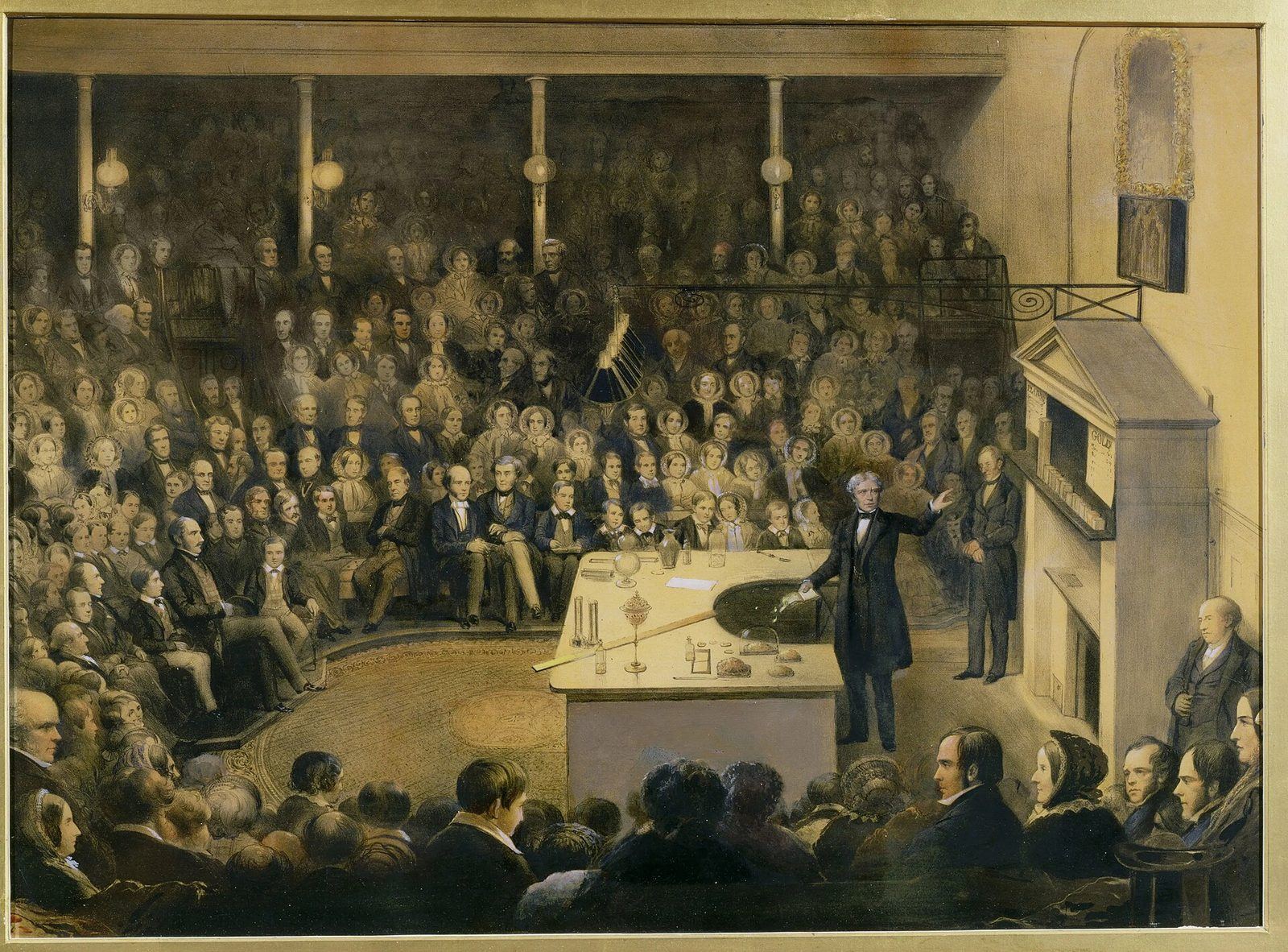
Learning in public also leaves a record. A year of notes, lessons, studies and projects in one place says more than any line on a CV. It shows not only what I know, but how I think and how that thinking has changed over time. It is useful to me as well as to anyone else. I can look back and see what I believed six months ago and, more interestingly, why I believed it. Michael Faraday, whose lectures at the Royal Institution drew crowds and whose notebooks and diaries survive in enormous detail, is a reminder of how much the record of thinking-in-progress can teach long after the conclusions have become textbook material.
It connects you with people, too. Writing about a question in public is a way of finding the others who care about the same question. Some of the most useful conversations start with a stranger saying, in effect, “I read your note on this, and I think you are missing something.” Those conversations do not happen with notes kept in a drawer.
The main reason not to do it is fear, and the fear is mostly about status: the worry of looking foolish, of being caught not knowing something. But nobody reasonable expects a learner to be an expert. Writing “this is what I understand so far, and here is what I am unsure about” is honest, and honesty is far easier to defend than a pretence of knowing everything. The people whose opinion matters tend to respect the first and see through the second.
So this site has a few rules that follow from all this. Everything is dated, and when my thinking changes, I update the piece and say so rather than quietly rewriting history. Unfinished ideas are labelled as seeds or growing ideas in the ideas section, so nobody mistakes them for conclusions. Studies are published with their method first, before any results, so that I cannot bend the plan to fit the answer once I have seen the numbers. And corrections are welcome. If you find a mistake anywhere here, please tell me. That is the whole point.
Ayoub Khallok keeps this archive of essays, research, lessons and notes, written to understand things more clearly. More about Ayoub.