A personal curriculum, planned like a university's
What if I planned my own learning in semesters, with syllabi and exams?
Published
12 October 2026
Universities are good at one thing that self-learners usually lack, and it is not knowledge, which is now mostly available to anyone with a library card and an internet connection. It is structure. A degree has semesters, a syllabus for each course, readings in a set order, problem sets with deadlines, and exams at the end that test whether any of it went in. Learning on your own usually has none of that. You read what looks interesting, follow a link, start a course and abandon it halfway, and after a year it is hard to say what you have actually learned. The idea here is simple: plan my own learning the way a university plans a degree, and see whether the structure works without the institution.
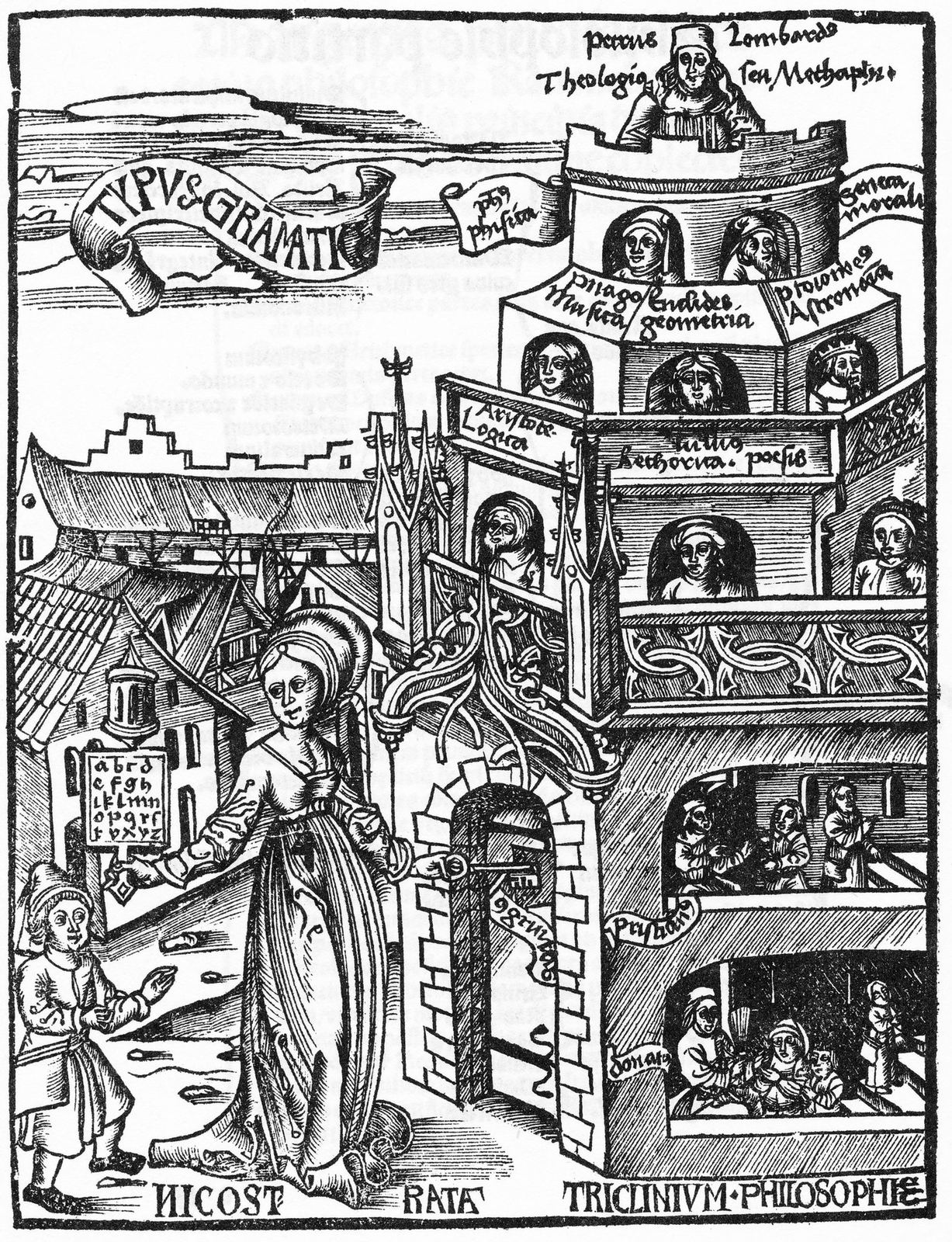
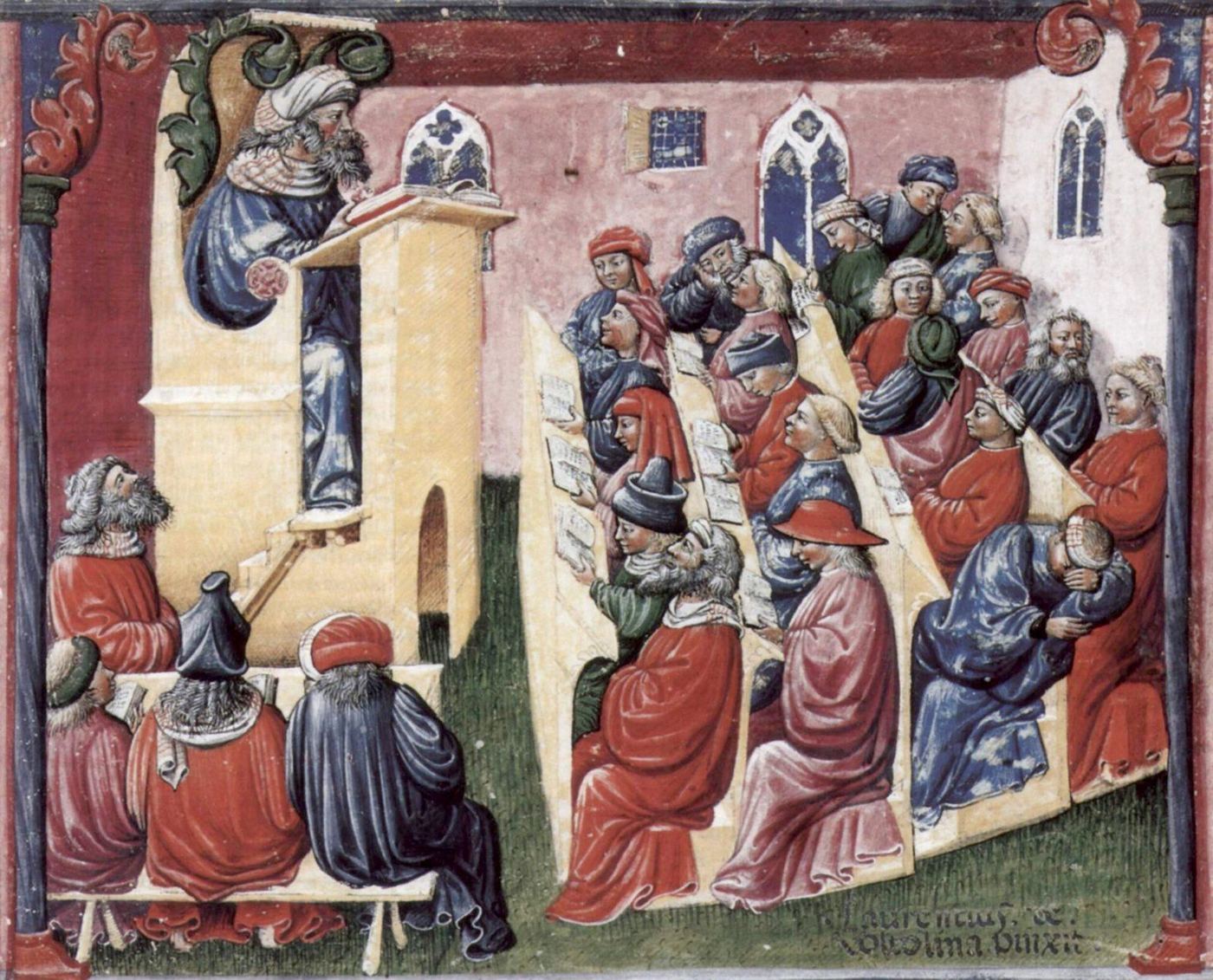
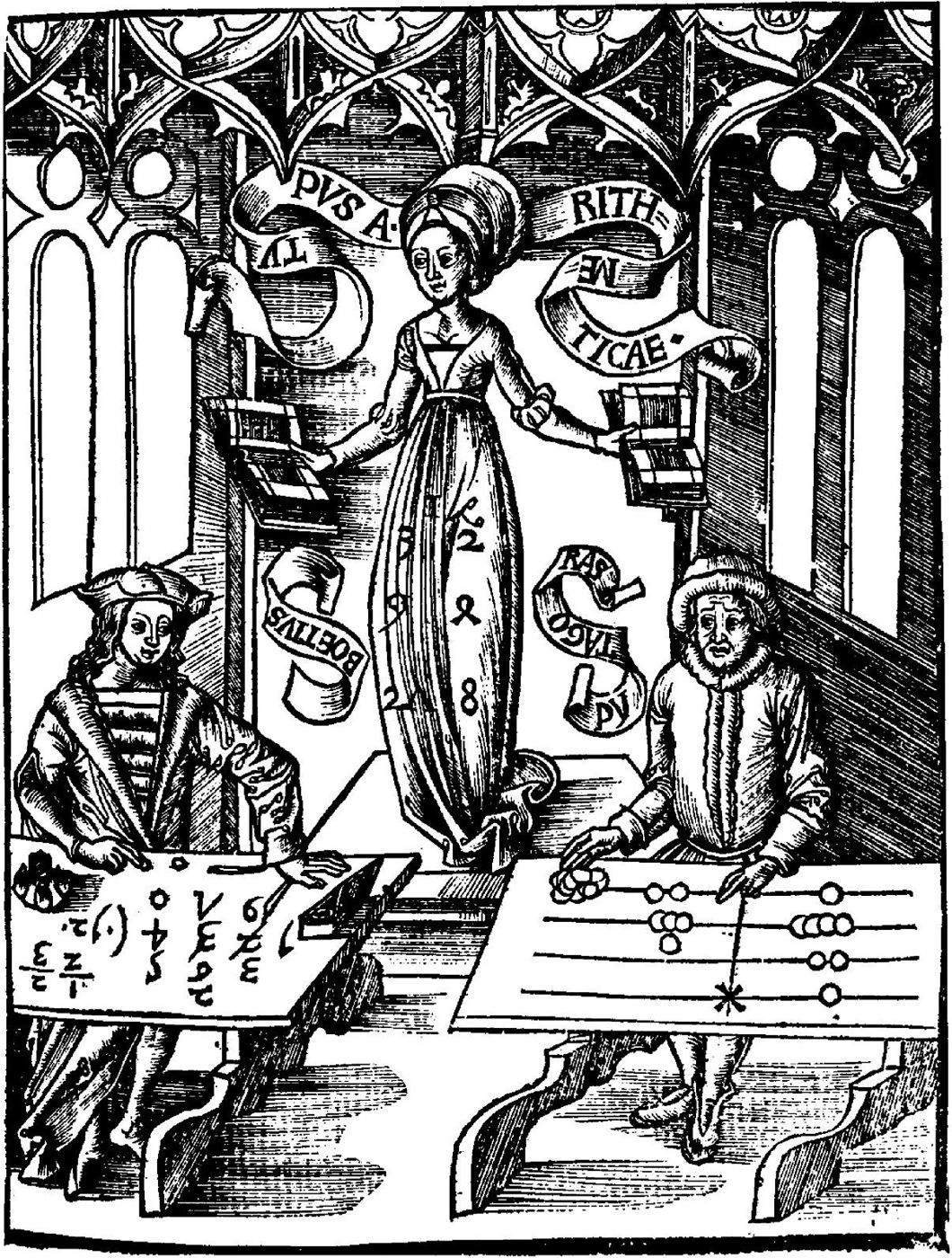
The structure itself is very old. The first European universities, at Bologna, Paris and Oxford, grew up around the end of the twelfth century, and they inherited a curriculum from late antiquity: the seven liberal arts, divided into the trivium of grammar, logic and rhetoric, and the quadrivium of arithmetic, geometry, music and astronomy. Students worked through set texts in a fixed order, attended lectures in which a master read and commented on those texts, and proved what they had learned in public disputations. A famous fourteenth-century painting by Laurentius de Voltolina shows Henry of Germany lecturing at Bologna. Most of the students in the front rows are following attentively. A few at the back are talking, and one appears to be asleep. Some things about university life have not changed.
What would a personal version look like? I imagine two terms a year, each about fourteen weeks long, with a short break between them, which is roughly how many universities divide their year. In each term there would be no more than three courses: one demanding one and two lighter ones, so that the load is sustainable alongside everything else. A term might pair introductory econometrics with the history of science and a course on design. Each course would get a proper syllabus, borrowed wherever possible from a real university course. Many universities now publish reading lists, lecture notes and even complete lecture recordings openly; MIT began putting its course materials online for free in 2002, and many others have followed. There is no reason to invent a syllabus when good ones are available.
Each week would have a fixed amount of work: the readings, any problem sets, and one short written summary of what the week covered. At the end of each course there would be an exam, ideally a past paper from a real university course, taken under time pressure and marked honestly against the published solutions. For courses where no exam makes sense, such as design or writing, a project could take its place, judged against a brief written in advance. Finally, there would be a transcript: a page on this site listing each course, what I covered, the materials I used and how the exam or project went.
The reasons this might work are mostly about removing decisions. Structure takes away the daily question of what to study next, which is where a surprising amount of self-directed learning stalls. Deadlines create gentle pressure without needing anyone else to enforce them. Exams turn “I think I understand this” into something that can be checked, and the result is often humbling in a useful way. Publishing the transcript adds accountability, because it is harder to quietly drop a course when its empty row is visible to anyone who looks.
There are open questions, and they are the reason this idea is still growing rather than finished. How do I stop it from becoming a chore? A real degree has classmates, and much of what people remember from university is learned from each other rather than from lectures. Perhaps each course could have a study partner, even one found online, with a weekly conversation about the readings. What about practical skills that do not have exams? A project may be the answer, but projects are harder to scope and easier to let drift. And should courses build on each other, with prerequisites, the way a university programme does, or should each term stand alone? Prerequisites make the whole more coherent. Independence makes it more flexible, and more likely to survive the inevitable changes of plan.
The next step is small and concrete. Draft one term: three courses, three syllabi drawn from real university courses, and a calendar with the weekly readings and the date of each exam. Then start it, and see whether the plan survives contact with real life. If it does, the transcript will go on this site. If it does not, the reasons it failed will go here instead, because they will be just as useful to anyone else thinking of trying the same thing.
Ayoub Khallok keeps this archive of essays, research, lessons and notes, written to understand things more clearly. More about Ayoub.