Notes as a graph, not a pile
Linking every note to at least two others, and seeing what clusters appear.
Published
4 August 2026
Most notes end up in a pile. There is a folder for each book, a file for each class, a notebook for each year, everything sorted by date or by source. That arrangement makes notes easy to file and hard to use, because the questions I actually want to answer rarely follow the boundaries of a single book or a single year. The idea here is to treat my notes as a graph instead: a network of small notes connected by links, in which what matters is not where a note is stored but what it is connected to. And then to look at the shape of that network, to see what it reveals about what I actually think about.
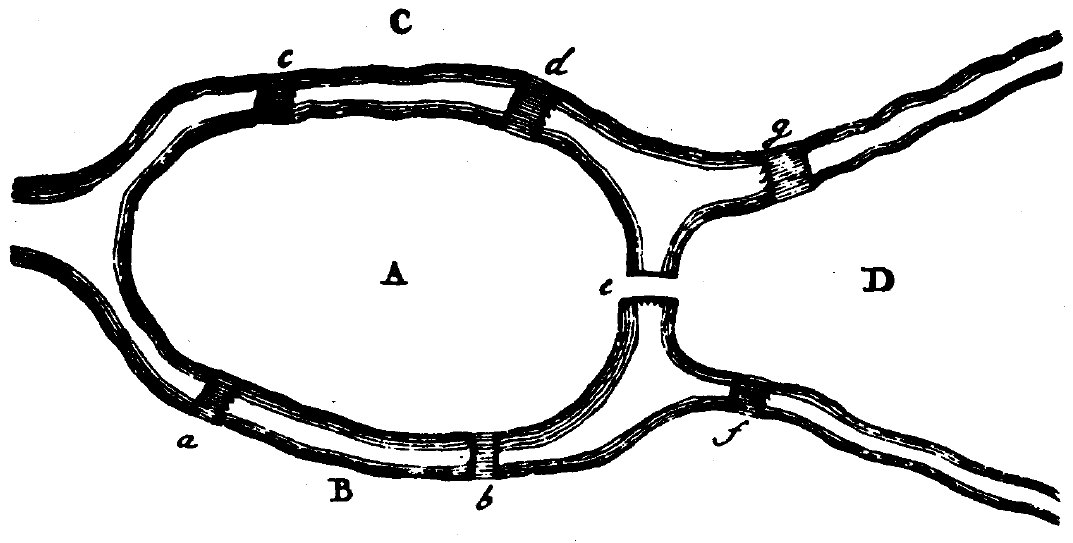
The word “graph” is used here in the mathematician’s sense, and that sense has a famous origin. In the eighteenth century, the Prussian city of Königsberg was built around two islands in the River Pregel, joined to the banks and to each other by seven bridges. The townspeople are said to have wondered whether it was possible to walk through the city crossing each bridge exactly once. In 1736 Leonhard Euler proved that it was not, and the way he did it was more important than the answer. He threw away everything about the map except the land masses and the bridges between them, reducing the city to points and lines. What mattered was the pattern of connections, not the distances or the shapes. That move is usually counted as the beginning of graph theory, which now underlies everything from route planning to the study of social networks.
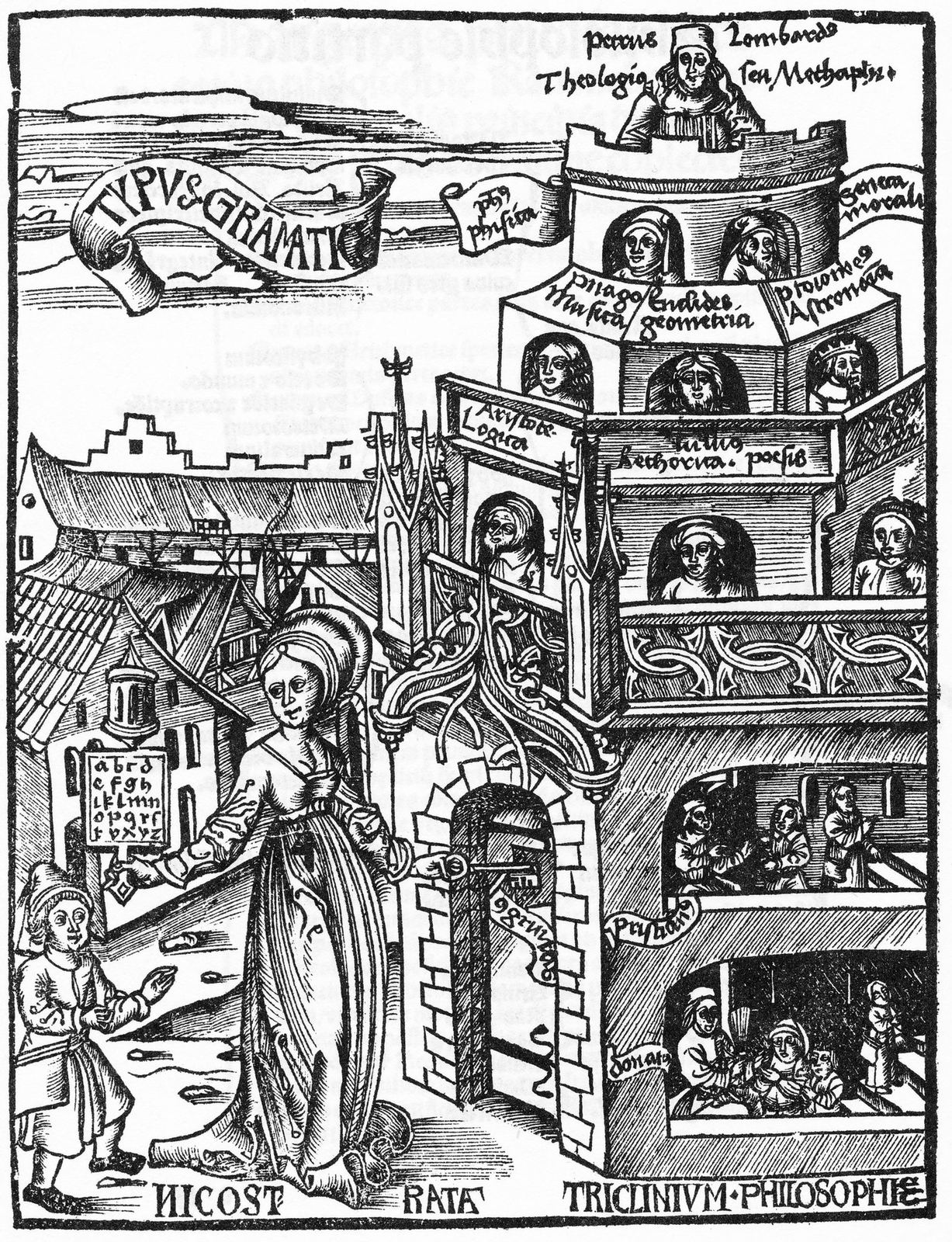
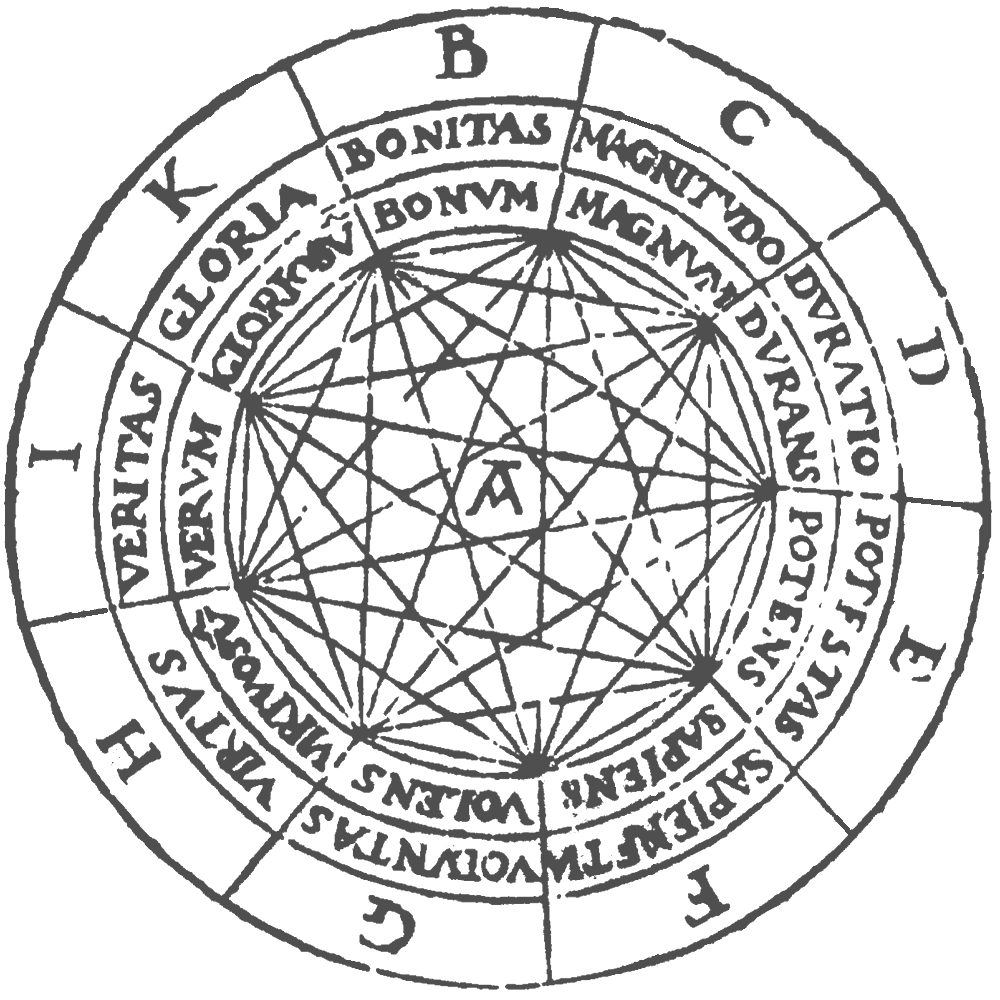
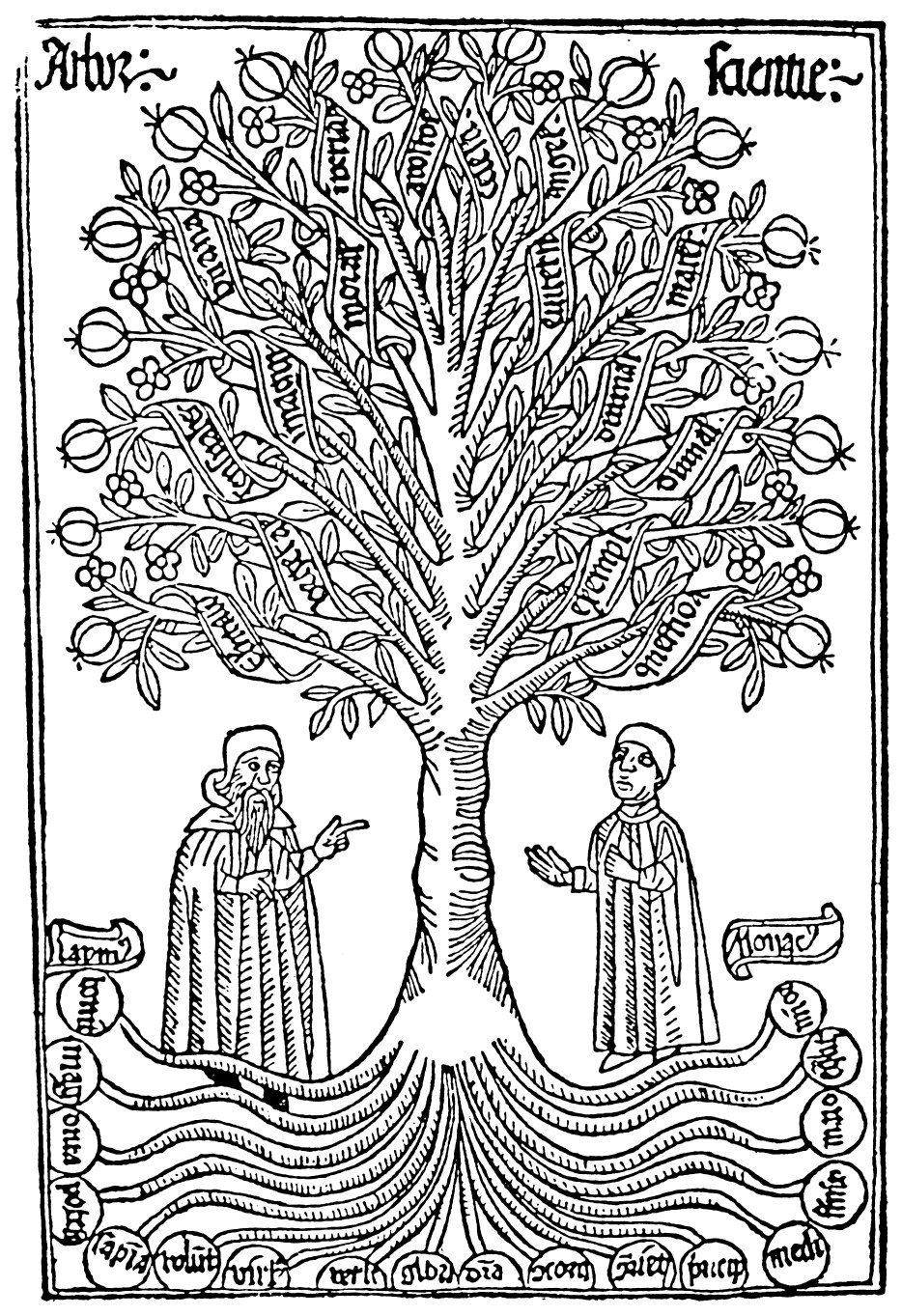
Thinkers had been drawing knowledge as connected diagrams long before that. The thirteenth-century Majorcan philosopher Ramon Llull built his Ars Magna around circles of letters standing for divine attributes, joined by lines so that every combination could be considered. He also drew the sciences as a great tree, its roots in basic principles and its branches in particular fields. In 1945 the American engineer Vannevar Bush, in an essay called “As We May Think”, imagined a desk-sized machine he called the memex, in which a researcher could link any document to any other and save the chains of links as “trails” to follow or share later. The way the web works owes a great deal to that essay.
The rule I want to try is simple. Every new note must link to at least two existing notes. Not to the book it came from, which is recorded separately as its source, but to other ideas: something the new note supports, contradicts, extends or simply reminds me of. Two is an arbitrary number, but it is enough to force a moment of thought about where the new idea fits, and few enough that the rule does not become a chore.
If the graph grows for a few months, I expect certain shapes to appear. There should be clusters, groups of notes that link heavily to each other. These would show the topics I actually think about, which may well differ from the topics I believe I study. There should be hubs, a few notes with many links. These are probably my core ideas, the ones that keep turning up in different contexts, and they are likely candidates for essays. There should be bridges, notes that connect two clusters that otherwise do not touch. These are the ones I am most curious about, because new ideas often come from bringing together distant fields, and a bridge is a sign that I have already started to do that without noticing. And there will be orphans, notes that nothing links to. Either they are not useful, or I have not yet seen where they fit, and both are worth knowing.
Seeing the graph is the easy part. Several note-taking tools can already draw the network of links automatically. Since my notes are plain Markdown files, a short script could also read them, collect every link, and export the network to a free visualisation tool, which would have the advantage of letting me measure things, such as which notes are most central, rather than just look at a picture.
The risk is obvious. Links made only to satisfy the rule are noise, and a graph full of meaningless connections would be worse than a tidy pile, because it would look meaningful. The rule is supposed to push me to think about connections, not to fake them. If a note honestly connects to nothing, that is a result worth noticing too, and I would rather leave it as an orphan than invent a relationship.
What would make the experiment worth it? If, after three months, the graph shows me a cluster or a bridge I had not noticed, and that discovery turns into an essay or a project, the idea will have paid for itself. If it shows me only what I already knew, that is useful as well, though less exciting. Either way, the results will go here.
Ayoub Khallok keeps this archive of essays, research, lessons and notes, written to understand things more clearly. More about Ayoub.
Enjoyed this piece? Follow along.
New essays, studies, lessons and notes arrive here a few times a month. There's no newsletter or algorithm, just an RSS feed for every section, so you can follow only what interests you.
SubscribeSubjectsTechnology, Learning
Filed inIdeas