How to take notes you will actually reuse
A simple method for turning highlights into ideas you can find again.
Published
1 July 2026

Most notes are written once and never read again. Highlights pile up in books and apps, underlined passages fade into the page, and when you need an idea six months later, you either cannot find it or you find it and no longer understand why it mattered. The problem is rarely the tool. People have taken good notes with quills, index cards and plain text files, and bad notes with the most sophisticated software available. The fix is a better habit, and the habit is surprisingly simple once it is laid out.
It begins by separating two jobs that are usually mixed together: capturing and writing. When you read, mark freely. Underline, highlight, put a line in the margin, write a question mark next to anything you doubt. That part should cost almost nothing, so that it does not interrupt the reading. The real note comes later, ideally on the same day while the book is still fresh. Go back through your marks and, for each idea worth keeping, write it again in your own words. This is the step most people skip, and it is the one that does the work. If you cannot explain an idea without copying the author’s sentence, you have not understood it yet, and that is very useful to know while you still have the book open.
Each note should hold one idea. A note that summarises a whole chapter can only ever be reread as a whole, in the context of that one book. A note that holds a single idea can be reused anywhere: in an essay about a different subject, in an argument with a different author, in a project years later. Keep each note short enough to read in under a minute. If it grows longer, that is usually a sign that it contains two ideas and should be split.
Give every note a title that makes a claim rather than a title that names a topic. “Chapter 4, spacing” tells you where an idea came from. “Spreading out practice beats cramming for long-term memory” tells you what the idea is, before you even open the note. When you browse your notes months later, claims are far easier to use than labels, because you can see at a glance whether a note supports the point you are trying to make.
Then link each new note to others. When you write it, ask what it reminds you of, what it supports, what it contradicts and what it extends. Add links to those notes, and from them back to the new one. This idea is most closely associated with the German sociologist Niklas Luhmann, who from the 1950s until his death in 1998 kept a Zettelkasten, or slip-box, of around ninety thousand index cards, each numbered and linked to others by references written on the card. He credited the slip-box with much of his extraordinary output of books and articles, and described it as something like a partner in conversation, because following its links would bring him to connections he had forgotten making. The value of such a system is not in any single card. It is in the connections, which let an idea from a book on economics meet an idea from a book on biology.
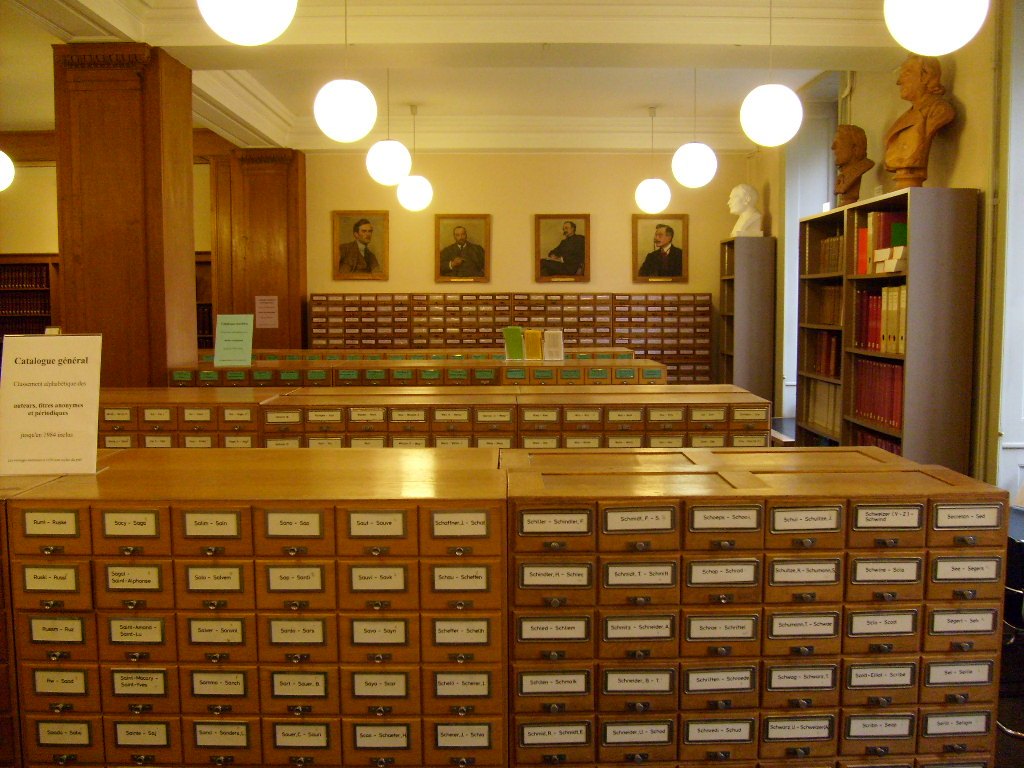
Luhmann was not the first to work this way. Scholars since the Renaissance had kept commonplace books and collections of paper slips, and in the seventeenth century some even built cabinets with hooks for hanging notes under headings so they could be rearranged. Library card catalogues, which spread in the nineteenth century, applied a similar idea to whole collections. What all these systems share is the recognition that knowledge becomes useful when it can be found and recombined, not when it is merely stored.
Under every note, write where the idea came from: author, title and page. You will want to check it, quote it or cite it later, and finding the right page again in a book of four hundred pages is painful. It also keeps you honest about the difference between what an author actually said and what you made of it.
The best way to review notes is not to reread them. It is to use them to write something: a summary of a book, an explanation for a friend, a short essay, a reply to an argument. Writing shows you which notes are clear and which are not, and it creates new connections between them. Rereading notes feels productive, but like rereading a textbook, it mostly produces a comfortable feeling of familiarity. Using them is what makes them stick.
Put together, the routine takes about five minutes after a reading session. Pick no more than three ideas worth keeping, because choosing is part of understanding. Write each one in your own words, with a claim as its title. Add the source. Link it to at least one existing note. Then, once a week, write a single short paragraph that uses a few of your notes together. After a few months you will have something more useful than a pile of highlights: a small network of ideas you understand, can find and can build on.
Next in the series: Statistics without the fear.
Ayoub Khallok keeps this archive of essays, research, lessons and notes, written to understand things more clearly. More about Ayoub.