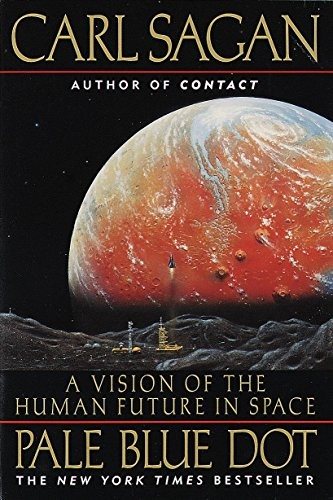
Pale Blue Dot
Carl Sagan's reflection on a single photograph of Earth, and what our place in space should mean for how we live.
Published
26 October 2026
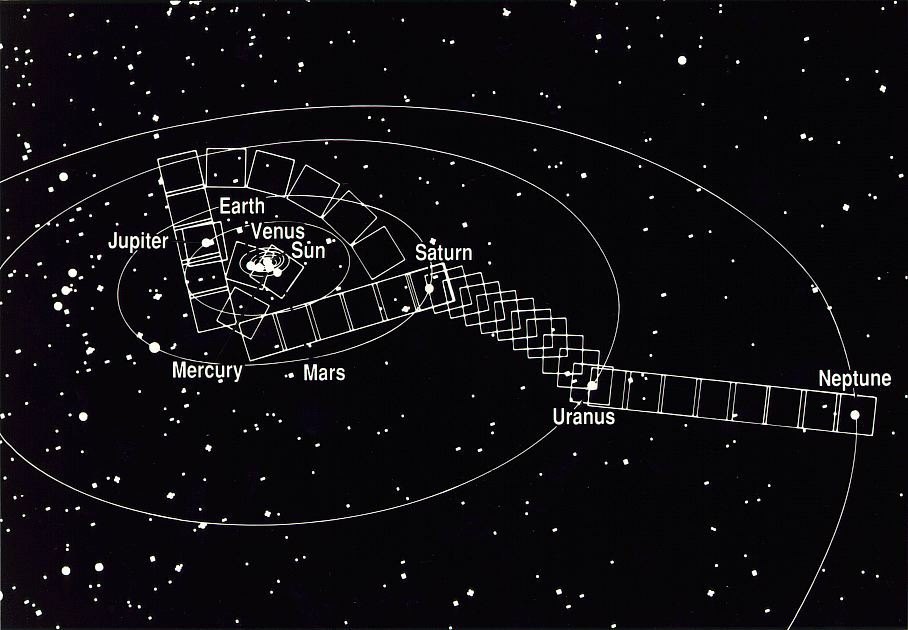
On 14 February 1990, the Voyager 1 spacecraft, by then about six billion kilometres from home and heading out of the solar system, turned its camera around one last time. The idea had been Carl Sagan’s, and it had taken years to win over NASA officials who worried that pointing the camera so close to the Sun might damage it, and who saw little scientific value in the pictures. The result was a mosaic of sixty frames, a family portrait of the planets seen from outside. In one frame, caught in a band of scattered sunlight, there is a speck smaller than a single pixel. That speck is the Earth, and Pale Blue Dot, published four years later, is Sagan’s book about what it means.
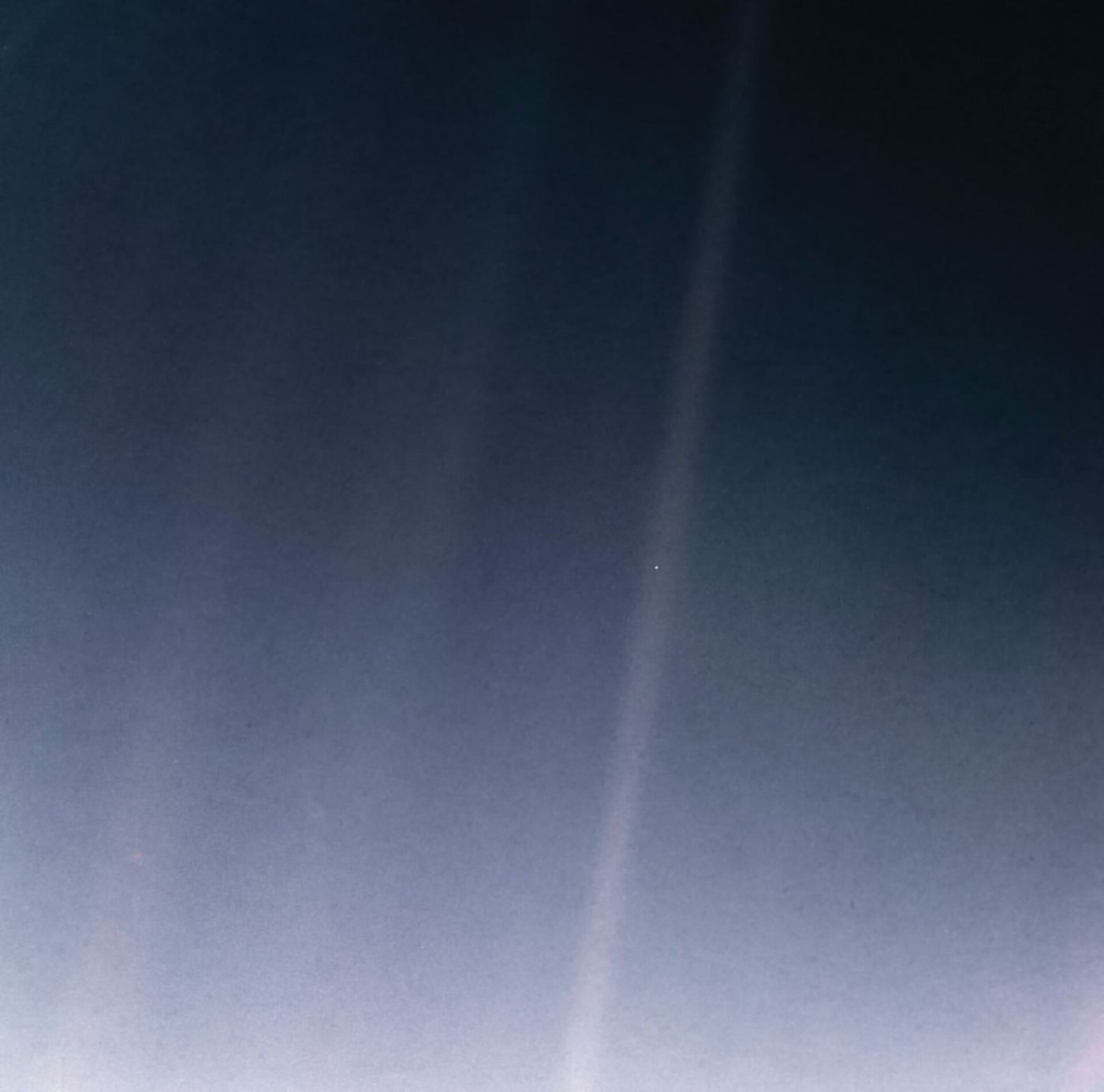
The famous passage comes early. Sagan asks the reader to look again at that dot and to consider that everyone they have ever loved, every person who ever lived, every king and peasant, every saint and tyrant, every war and every civilisation, existed on that mote of dust suspended in a sunbeam. It is one of the most widely quoted pieces of science writing, and deservedly so, but the book around it is less well known and more ambitious. Its subtitle, A Vision of the Human Future in Space, describes its real subject. The photograph is the starting point for an argument about who we are, where we have been, and where we might go.
The first part of that argument is historical, and Sagan calls it a series of great demotions. For most of history, people assumed that the Earth sat at the centre of everything and that human beings were the purpose of creation. One by one, those assumptions fell. Copernicus moved the Earth from the centre of the solar system. Later astronomers found that the Sun was an ordinary star, one of hundreds of billions in the Milky Way, and that it sat not at the galaxy’s centre but out in one of its spiral arms. In the twentieth century, the Milky Way itself turned out to be one galaxy among a vast number. Darwin showed that human beings were part of the tree of life, not set above it. Sagan presents each step as a loss of status and a gain in understanding, and he argues that the photograph completes the series: from far enough away, the whole human world is a point of light that could easily be missed.
He is clear that this is not a reason for despair. Humility, in his telling, is not the same as insignificance. We are small, but we are also the part of the universe that has worked out how small we are, and that knowledge brings a kind of responsibility. The conclusion he draws from the image is direct and practical. Our conflicts, so enormous to those who fight them, would be invisible from Voyager. There is no sign that help will come from elsewhere to save us from ourselves. The Earth is, as he puts it, the only home we have ever known, and looking after it, and after each other, is the obvious consequence of seeing it clearly.
Much of the middle of the book is a tour of the solar system as the missions of the 1970s and 1980s revealed it. Sagan had worked on many of them, and he writes with the excitement of someone who had been in the room when the images came in. Venus, wrapped in clouds of sulphuric acid and crushed beneath an atmosphere ninety times as dense as ours, is presented as a warning about runaway greenhouse heating. Mars, with its dry riverbeds and polar caps, raises the question of whether it was once warmer and wetter, and whether life could have begun there. The moons of the outer planets turn out to be worlds in their own right: volcanic Io, the icy crust of Europa, Titan hidden beneath an orange haze rich in organic molecules. Each chapter combines what the spacecraft found with what remained unknown, and many of the questions Sagan poses have since been taken up by later missions.
The later chapters move from exploration to settlement, and they are the most speculative part of the book. Sagan argues that in the long run, a species confined to one planet is vulnerable. Asteroids and comets have struck the Earth before, with catastrophic results, and will again; the same technology that might deflect them could also be misused. He imagines human beings eventually living on other worlds, and even reshaping them to be more like Earth, and he treats these possibilities as thought experiments that ask what kind of species we would need to become to deserve them. He is careful to frame them that way. These chapters read more like an invitation than a plan, and some of the specifics now feel dated, but the underlying question, whether we can take a long enough view to protect our future, has only become more pressing.
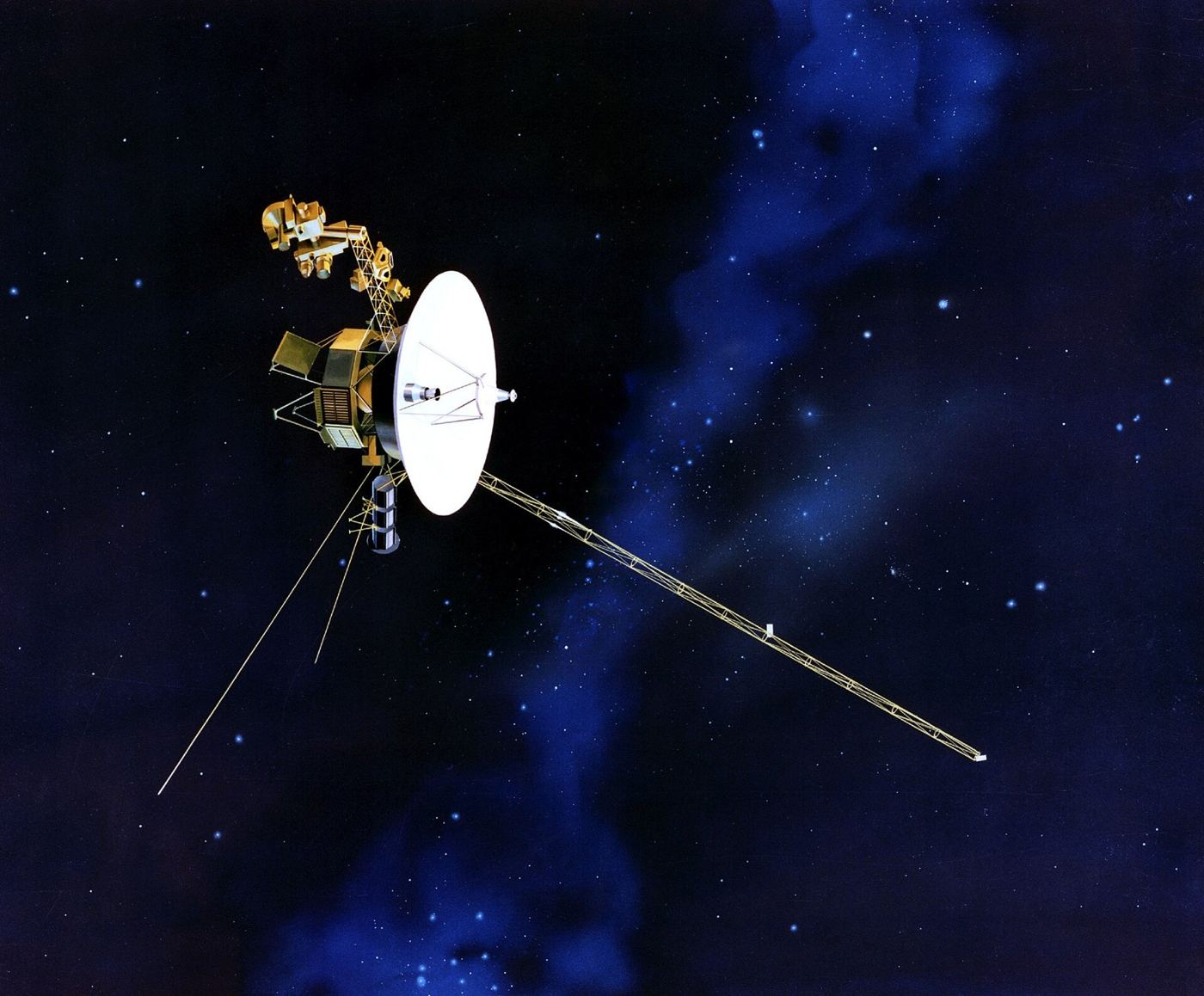
Reading the book now, one notices how much has changed since 1994. Thousands of planets have been found around other stars, some of them roughly Earth-sized. Spacecraft have orbited Saturn, landed on Titan, flown past Pluto and returned samples from asteroids. Voyager 1 itself has passed beyond the bubble of the solar wind into interstellar space and is still sending faint signals home. None of this undermines the book. If anything, it confirms Sagan’s sense that the solar system and the galaxy are full of worlds, and that our own is one of many.
What remains most powerful is the way Sagan uses a single image to make an abstract idea feel physical. It is easy to agree in principle that the Earth is small and fragile. It is harder to forget it after looking at the photograph, and reading Sagan’s patient account of what that faint speck contains. The book’s lesson is that perspective can change behaviour: seen from far enough away, every border and every grudge fits inside one point of light, and the work of looking after that point is shared by everyone on it.
Ayoub Khallok keeps this archive of essays, research, lessons and notes, written to understand things more clearly. More about Ayoub.
Enjoyed this piece? Follow along.
New essays, studies, lessons and notes arrive here a few times a month. There's no newsletter or algorithm, just an RSS feed for every section, so you can follow only what interests you.
SubscribeSubjectsScience, Philosophy
Filed inLibrary