The Analects
The sayings of Confucius, gathered by his students, on learning, character and how to live well with others.
Published
26 October 2026
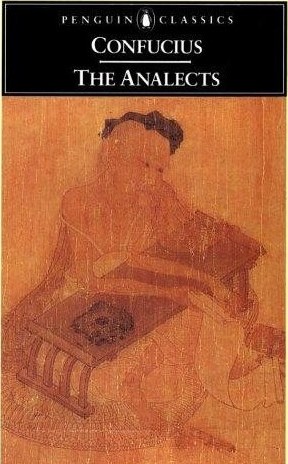
Confucius wrote no book. The man known in China as Kongzi, Master Kong, lived from around 551 to 479 BCE in the small state of Lu, in what is now Shandong province, during a period when the old Zhou order was breaking down into rival states and endless war. He spent much of his life seeking a ruler who would put his ideas about government into practice, travelling from court to court with a band of students, and he never quite found one. What survives of his teaching is The Analects, in Chinese the Lunyu, roughly “selected sayings”: a collection of short remarks and brief conversations, recorded and edited by his disciples and their own followers over several generations after his death.
That origin explains the book’s shape, which can be bewildering at first. There are twenty short books, each made up of numbered passages, some a single sentence, some a few lines of dialogue. Topics shift without warning. Some sayings repeat others with small variations; some refer to people and events that the original readers knew and we can only guess at. Scholars have long argued about which layers are earliest and which were added later. It is less like reading a treatise than like overhearing fragments of a long conversation between a teacher and the students who loved and argued with him. Read with patience, though, a consistent voice emerges, and a consistent set of concerns.
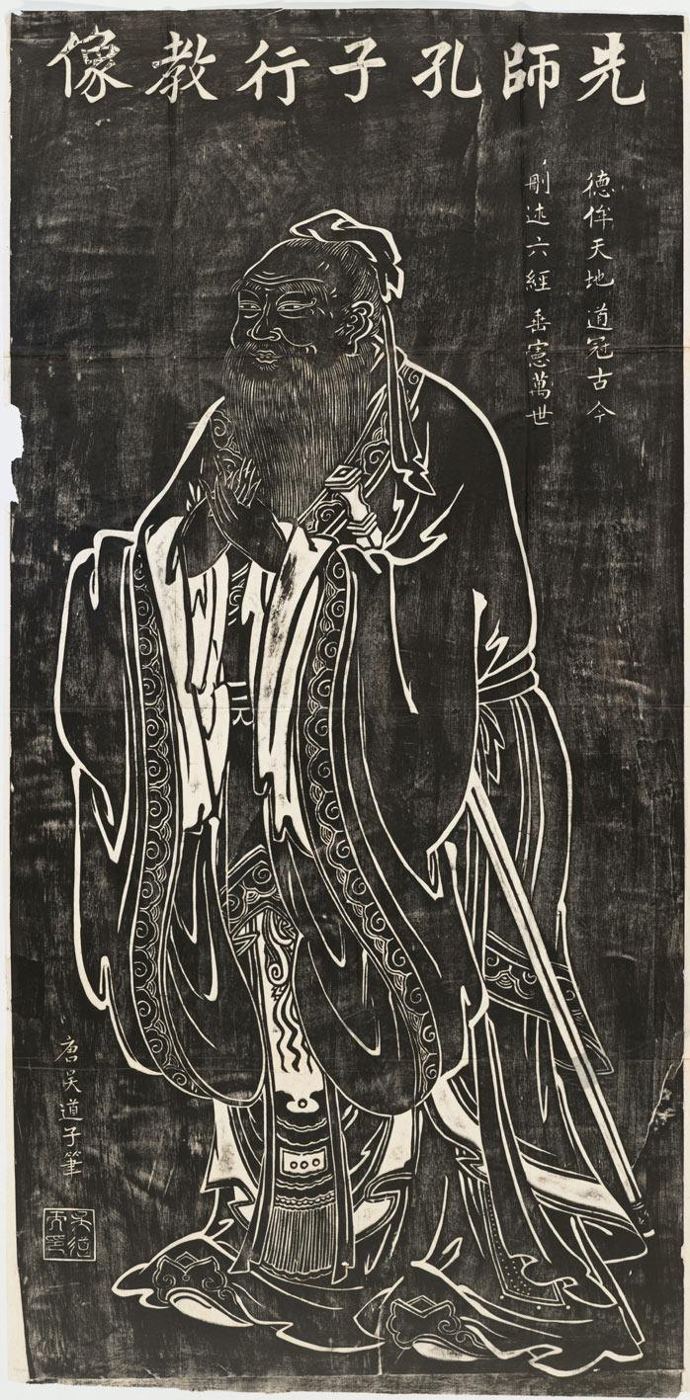
The first of these is learning. The book opens with the pleasure of study, of practising what one has learned, and of friends arriving from far away, and it returns to learning more often than to any other subject. For Confucius, learning did not mean collecting information. It meant studying the songs, histories and rituals inherited from the past, reflecting on them, and practising them until they shaped the way one acted. One of the best-known passages warns that learning without thinking leads nowhere, while thinking without learning is dangerous. Another defines knowledge in a way that still feels modern: to know what you know, and to recognise what you do not know, is what knowing really is. Confucius describes himself not as an originator but as a transmitter who loves the ancients, and as someone who became so absorbed in learning that he forgot to eat and did not notice old age approaching.
The second concern is character. Much of the book describes the junzi, a term that originally meant the son of a ruler, a noble by birth, and that Confucius reinterpreted to mean a noble by conduct: a person of integrity, usually translated as the gentleman or the exemplary person. The junzi is set against the xiaoren, the petty person. The gentleman understands what is right, the petty person what is profitable; the gentleman looks for faults in himself, the petty person in others; the gentleman is at ease without being arrogant, the petty person arrogant without being at ease. These contrasts are simple, almost proverbial, and that is their strength. They are meant to be carried around and applied, not analysed.
At the centre of this picture of character is ren, the most important and most debated term in the book. It is variously translated as goodness, benevolence, humaneness or authoritative conduct, and Confucius never gives a single definition, answering differently depending on who is asking. When a student asks for one word that could guide a whole life, he offers reciprocity, and explains it with a negative form of what Western readers know as the Golden Rule: do not impose on others what you would not want for yourself. Ren is closely tied to li, the rituals and forms of courtesy that governed everything from sacrifices to ancestors to the way one greeted a guest. Modern readers often find the emphasis on ritual stiff, but Confucius saw it as the outward shape of respect, a way of training feeling through practice. Ritual without inner sincerity, he says, is empty; but sincerity without form tends to be clumsy or harsh.
The third concern is government. Confucius lived among rulers who relied on punishment and force, and he argued that this produced obedience without shame. A ruler who governs through virtue and ritual, he said, will be like the pole star, which stays in its place while the other stars turn around it. People follow what they see, so the first duty of anyone in authority is to set an example. This is linked to the idea of rectifying names: if a ruler is truly a ruler and a father truly a father, behaving as the name requires, then order follows. It is an idealistic view, and it was not adopted by the rulers of his own time. But after his death his followers, especially Mencius and Xunzi, developed it into a full philosophy, and centuries later, under the Han dynasty, Confucian learning became the basis of state education. For roughly two thousand years, the Analects was among the texts that every aspiring official in China had to master.
Some of the book belongs firmly to its time. Its ideal society is hierarchical; it takes for granted the authority of rulers over subjects, fathers over sons and husbands over wives, and its few remarks about women are dismissive. These parts should be read critically, as products of a particular world. What is surprising is how much does not feel dated: the insistence that learning must change how one lives, the honesty about the limits of one’s knowledge, the idea that character is built in small daily acts rather than grand gestures, and the steady warmth with which Confucius treats his students, praising one, teasing another, grieving deeply when his favourite, Yan Hui, dies young.
The book reads best a few passages at a time, with a translation that has good notes on names and context; the nineteenth-century version by James Legge is in the public domain, and several modern translations explain the difficult passages well. Taken slowly, the fragments add up to something more than a list of sayings: a portrait of a teacher who believed that ordinary people could become good through study and practice, and who spent his life trying to show them how.
Ayoub Khallok keeps this archive of essays, research, lessons and notes, written to understand things more clearly. More about Ayoub.
Enjoyed this piece? Follow along.
New essays, studies, lessons and notes arrive here a few times a month. There's no newsletter or algorithm, just an RSS feed for every section, so you can follow only what interests you.
SubscribeSubjectsPhilosophy, History
Filed inLibrary