The Elegant Universe
Brian Greene's explanation of string theory and the search for a single theory that unites all of physics.
Published
26 October 2026
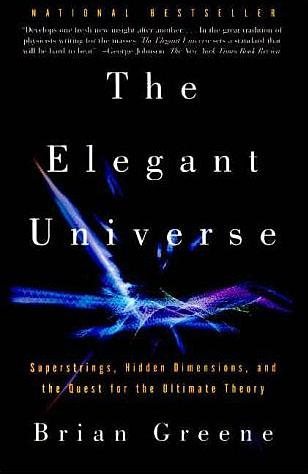
Modern physics rests on two great theories that do not fit together. General relativity, Einstein’s theory of gravity, describes the universe on the largest scales: the orbits of planets, the bending of starlight, the expansion of space. Quantum mechanics describes the very small: atoms, particles and the forces between them. Each has passed every experimental test it has been given, often to astonishing precision. And yet, in the places where both should apply at once, at the centre of a black hole or in the first instant of the universe, combining them produces nonsense. The Elegant Universe, published in 1999, is Brian Greene’s account of string theory, the most famous attempt to resolve that conflict, and of the strange picture of reality it implies.
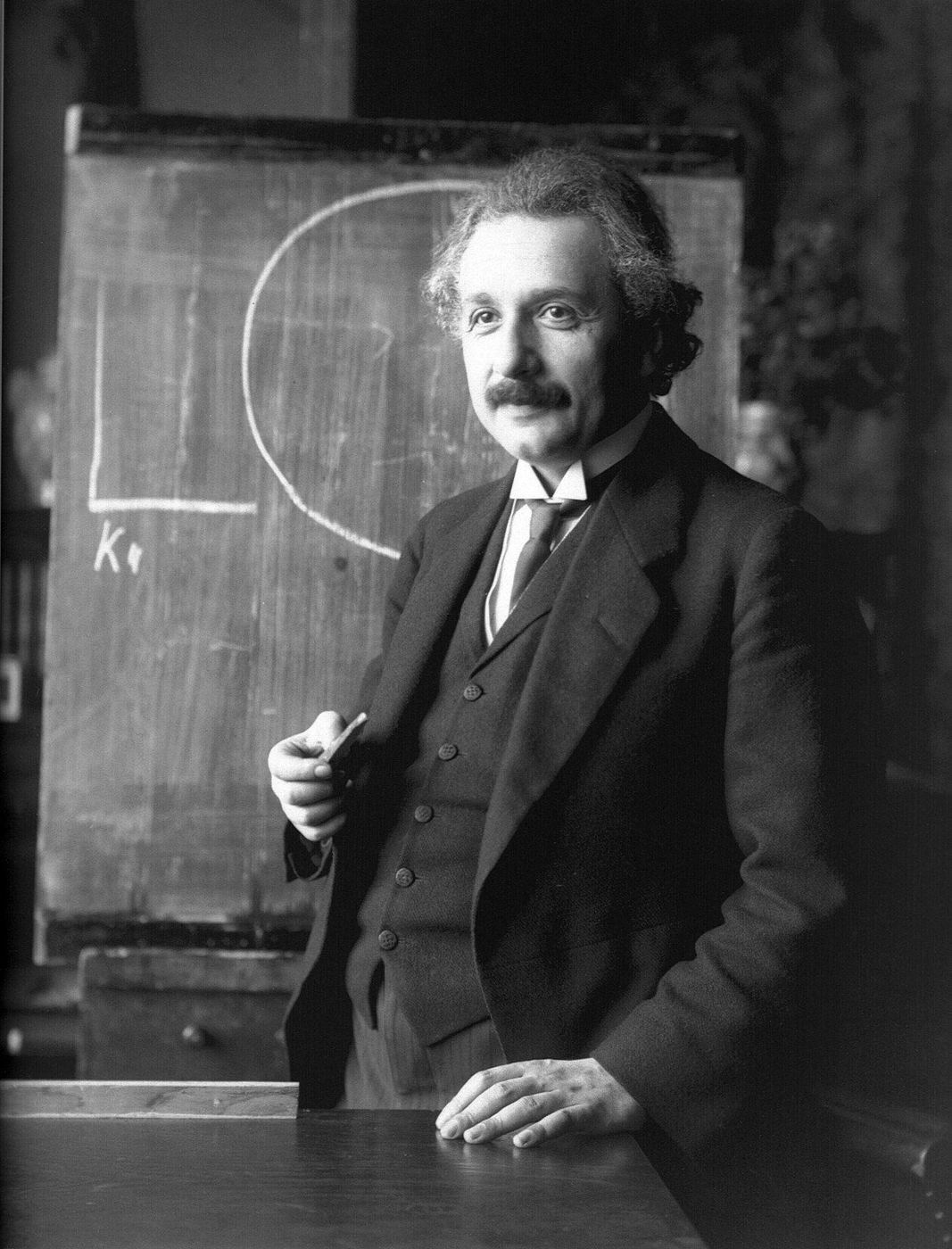
Greene is a string theorist himself, and the book is in part a report from inside the field. But it is also a careful introduction to the physics that string theory is trying to unify, and its first third is among the clearest explanations of relativity and quantum mechanics written for general readers. He begins with special relativity and the idea that the speed of light is the same for every observer, and he shows, through thought experiments with trains, clocks and lasers, why this forces time to run differently for observers in relative motion. He then moves to general relativity, in which gravity is no longer a force pulling across space but the curvature of space and time themselves, shaped by the matter and energy within them.
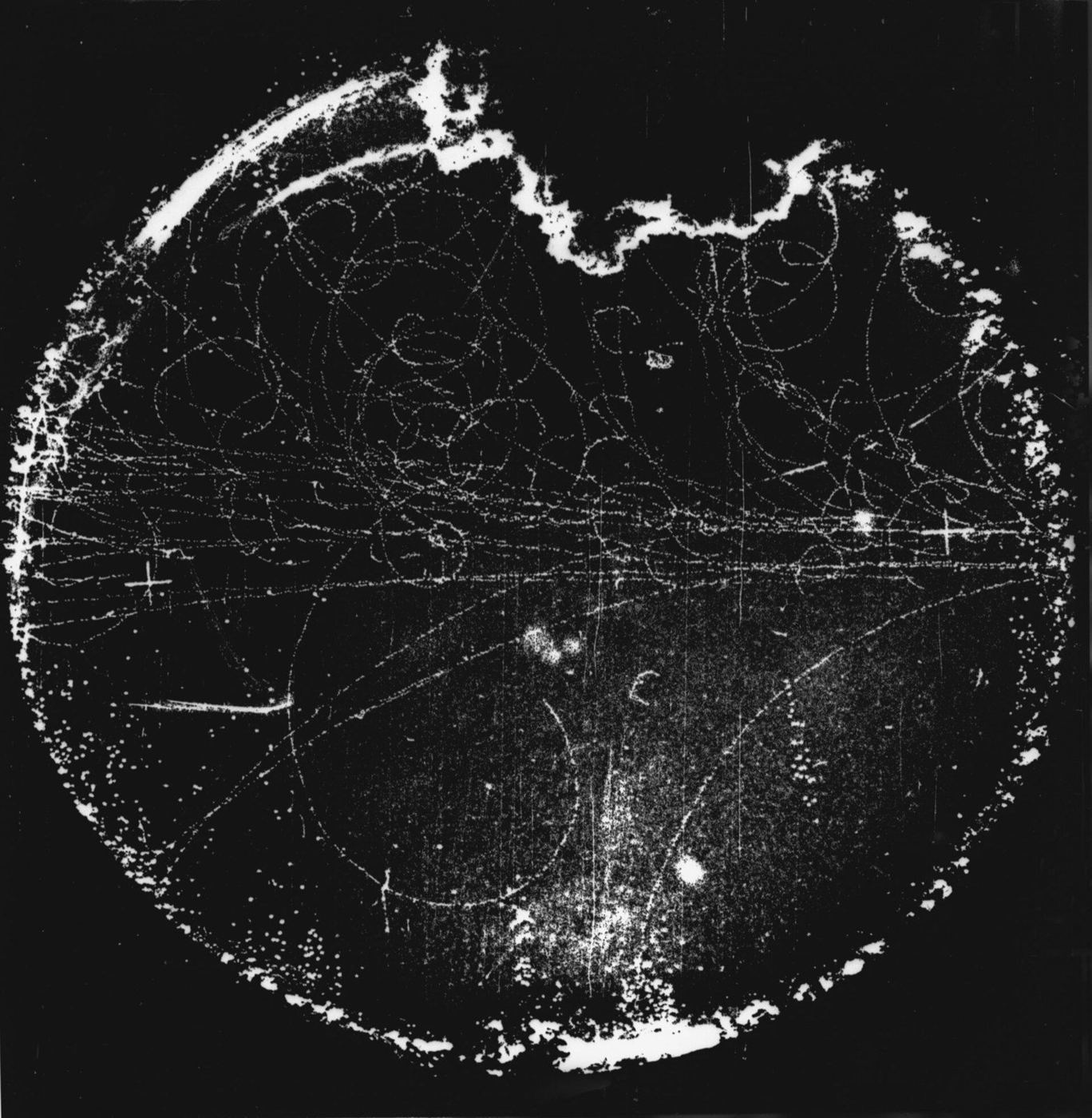
The quantum chapters introduce a very different world. At small scales, energy comes in discrete packets; particles behave like waves and spread out over regions of space; and the uncertainty principle sets limits on what can be known at once. Greene is particularly good at explaining why this matters for gravity. According to quantum mechanics, even empty space is not calm on very small scales. Fields fluctuate violently, and the smaller the region one examines, the more violent the fluctuations become. General relativity assumes that space is smooth and gently curved. At distances around the Planck length, roughly a hundred billion billion times smaller than a proton, the quantum jitter becomes so wild that the smooth geometry of relativity breaks down, and calculations that combine the two theories produce infinite answers. This, Greene argues, is not a technical inconvenience. It is a sign that our understanding of nature is incomplete at its foundations.
String theory proposes a radical change in the basic ingredients. Instead of point-like particles, the fundamental objects are tiny one-dimensional loops or strands of energy, strings, far too small to be seen even with the most powerful particle accelerators. Like the strings of a violin, they can vibrate in different patterns, and each pattern of vibration would appear to us as a different particle, with a different mass and charge. An electron, a quark and a photon would then be not different kinds of thing but different notes played on the same kind of string. One of these vibration patterns turns out to have exactly the properties of the graviton, the hypothetical particle that carries gravity, which is why string theorists were so excited: gravity seemed to emerge from the theory naturally rather than having to be forced in. And because strings are extended rather than point-like, they smear out the violent fluctuations at the smallest distances, removing the infinities that plagued earlier attempts.
The price of this elegance is extra dimensions. For the mathematics of string theory to be consistent, the universe must have more dimensions of space than the three we know, nine or ten in total depending on the version. Greene explains how such dimensions could exist without our noticing, using the image of a garden hose seen from far away: it looks like a one-dimensional line, but up close an ant can walk around its circular cross-section. The extra dimensions, on this picture, are curled up into tiny, intricate shapes at every point of space. The precise shape matters enormously, because it would determine how strings can vibrate and therefore which particles and forces exist in our world. The chapters on these shapes, and on the remarkable mathematical discoveries that string theorists made while studying them, are among the most demanding in the book, but Greene’s diagrams and analogies make it possible to follow the outline.
The later chapters describe what became known as the second superstring revolution of the mid-1990s. By then there were five different versions of string theory, which was an embarrassment for a supposed theory of everything. Edward Witten and others showed that the five were connected by a web of mathematical relationships, called dualities, and suggested that they were all different approximations to a single deeper theory, which Witten called M-theory. Greene writes about this period with the excitement of someone who took part in it, and he also explores what string theory might say about black holes and the origin of the universe.
The great weakness of string theory, which Greene acknowledges but which looms much larger now than it did in 1999, is the lack of experimental evidence. The theory has made no prediction that has been confirmed by experiment. The strings themselves, if they exist, are far beyond the reach of any conceivable accelerator, and the hope that the Large Hadron Collider would find signs of related ideas, such as supersymmetry, has not been fulfilled. Critics, including physicists such as Lee Smolin and Peter Woit, have argued that the field has become too detached from observation, and that the vast number of possible shapes for the extra dimensions makes the theory almost impossible to test. Greene presents string theory with understandable enthusiasm, so the book is worth reading alongside some of these critiques.
What remains impressive is the book’s teaching. Greene’s analogies, the hose, the violin, the travelling twins, make very abstract ideas feel almost visible, and his explanation of why unification matters is clear and honest: physicists do not want a single theory merely for neatness, but because the two theories we have contradict each other where both are needed. The book also shows how beauty and consistency act as guides in places where experiments cannot yet reach, and it is honest, if hopeful, about the risks of relying on them. It is a clear guide to one of the boldest ideas in physics, and a reminder that a beautiful idea is still only an idea until nature agrees.
Ayoub Khallok keeps this archive of essays, research, lessons and notes, written to understand things more clearly. More about Ayoub.