The First Three Minutes
Steven Weinberg's account of what happened in the first minutes after the Big Bang, and how we know.
Published
26 October 2026
In the spring of 1965, two radio astronomers at Bell Telephone Laboratories in Holmdel, New Jersey, could not get rid of a noise. Arno Penzias and Robert Wilson had inherited a large horn-shaped antenna, built to bounce signals off early communications satellites, and wanted to use it to measure faint radio emission from our own galaxy. Wherever they pointed it, a weak hiss of microwaves remained, the same by day and by night, the same in every direction. They checked the electronics, the joints, the alignment. They famously cleared out a pair of pigeons that had been nesting inside the horn, along with what they politely called a white dielectric material. The hiss stayed. It was not in the instrument. It was in the sky.
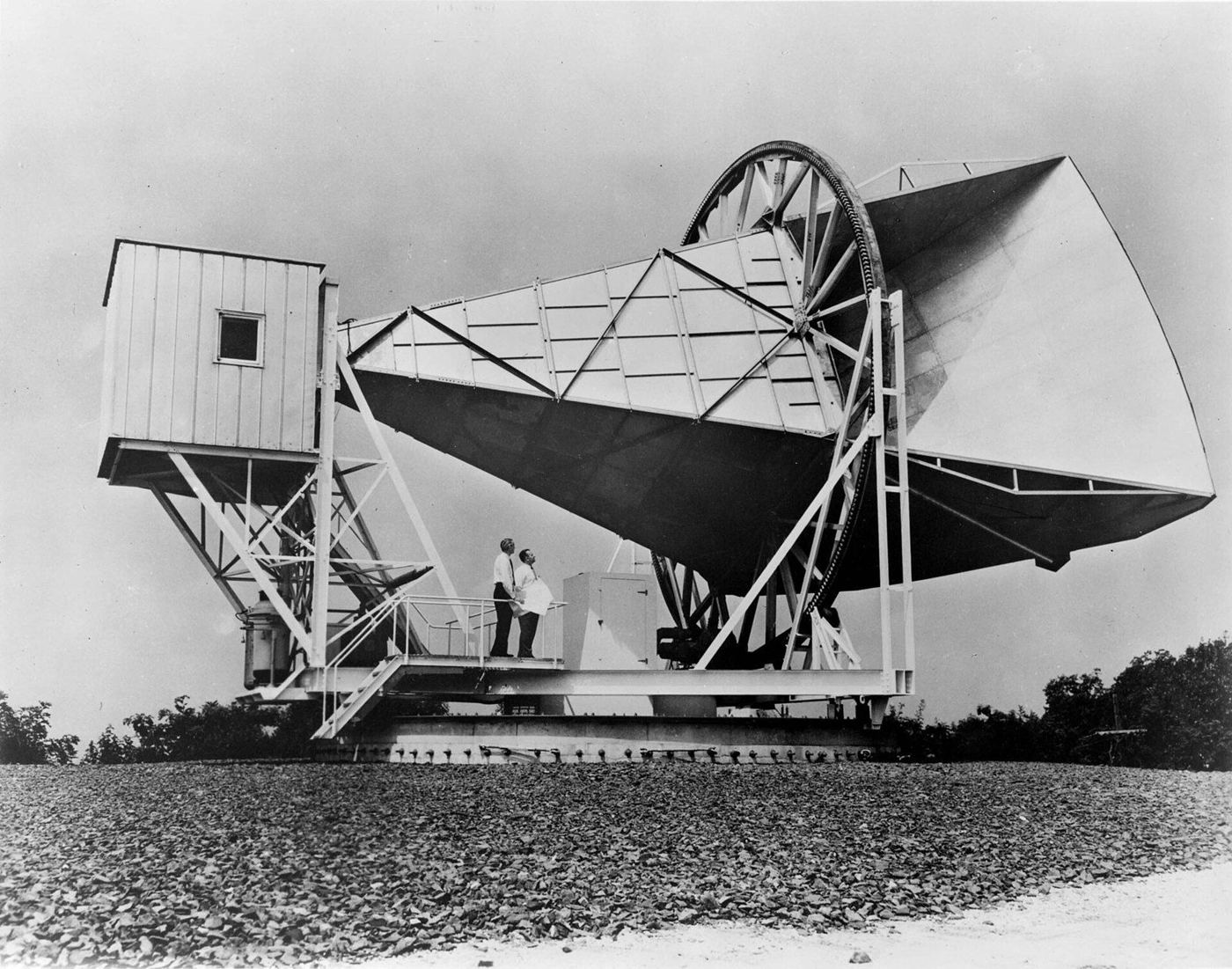
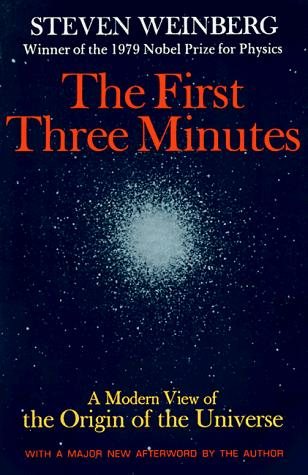
Steven Weinberg’s The First Three Minutes is, in a sense, a book-length explanation of that hiss. It was the cooled afterglow of the universe itself, radiation released when the cosmos was young, hot and dense, and stretched over billions of years into the faint microwave glow that Penzias and Wilson had mistaken for a fault. Weinberg was a theoretical physicist of the first rank, and two years after the book appeared in 1977 he shared the Nobel Prize for work on the unification of two of nature’s forces. He wrote it, as he says in the preface, for readers willing to follow a detailed argument without the mathematics, and he assumes they are intelligent rather than expert. What he offers is not a vague panorama of the Big Bang but something much stranger and more specific: an account, almost frame by frame, of what the universe was like during its first few minutes, together with the evidence that makes each frame believable.
The argument begins far from the beginning, with the slow realisation in the 1920s that the galaxies are moving apart. Light from distant galaxies is shifted towards the red end of the spectrum, and the further away a galaxy is, the larger the shift. Weinberg is careful about what this does and does not mean. It is not that we sit at the centre of an explosion, with everything flying away from us; any observer in any galaxy would see the same pattern. It is space itself that is expanding. Run that film backwards and the conclusion is hard to avoid: at some point in the past, everything we can see was packed together at enormous density and temperature. For decades this was a respectable idea without decisive support. Some astronomers preferred a steady-state universe, eternally expanding and eternally creating new matter to fill the gaps. What tipped the balance was the microwave background, because a hot early universe predicts it and a steady-state universe does not.
The most striking passages are the ones in which Weinberg simply describes what happened, with the calm of someone reading out the minutes of a meeting. In his first frame, about a hundredth of a second after the beginning, the temperature is around a hundred thousand million degrees Kelvin, far too hot for atoms or even atomic nuclei to hold together. The universe is a dense soup of light and particles, electrons and their antimatter twins the positrons, neutrinos, and a small contamination of protons and neutrons, roughly one for every thousand million photons. As the soup expands it cools, and as it cools, the balance between its ingredients shifts. Electrons and positrons annihilate one another. Neutrons, slightly heavier than protons, begin to decay or are converted, so that their share falls steadily. Then, at around the time that gives the book its title, the temperature drops low enough for protons and neutrons to stick together into nuclei and stay stuck. Almost all the remaining neutrons are swept up into helium. When the frames stop, roughly a quarter of the ordinary matter in the universe, by weight, has been turned into helium, along with a trace of deuterium and lithium, and the rest is hydrogen.
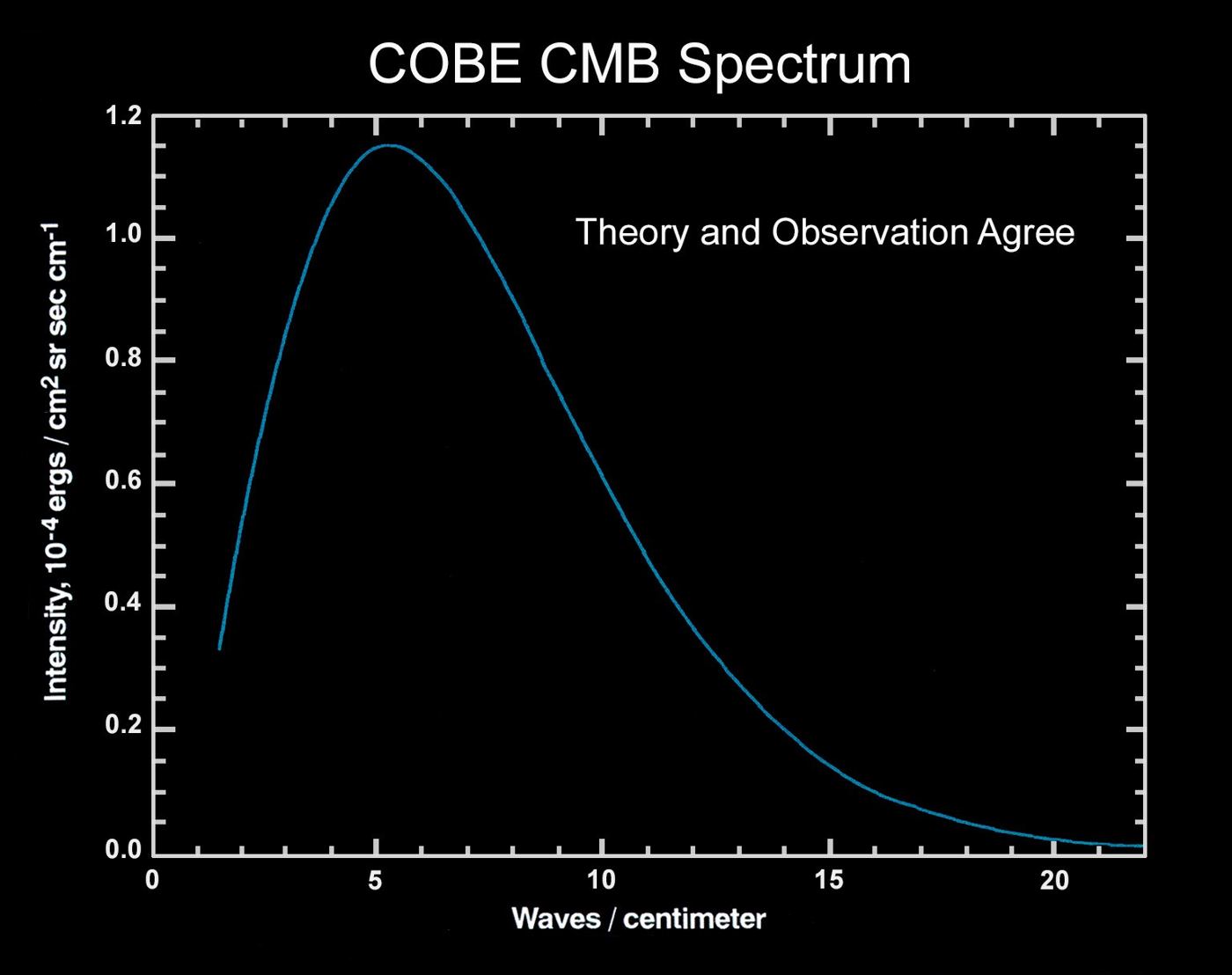
This is the point at which the book changes from storytelling into something more like proof, and it is the part I found most satisfying. The proportions are not decoration. They follow from known physics, from the rates at which particles interact and from how fast the universe was expanding, and they can be checked. Astronomers measuring the composition of old stars and gas clouds do indeed find about one part helium to three parts hydrogen by mass, which is far more helium than the stars could have made in the time available. The background radiation, meanwhile, has exactly the spectrum expected of light that was once in equilibrium with hot matter. Two quite different measurements, one made with spectrographs and one with radio receivers, point to the same picture. Weinberg’s quiet confidence comes from this agreement. He is not asking the reader to believe a story because it is grand, but because its numbers come out right.
He is just as careful to say where the reasoning stops. The first frame starts at a hundredth of a second, not at zero, because before that the temperatures were so high that the physics of the time could not say much with confidence. Weinberg spends a chapter on that earlier era and on the things that remain unknown, and he treats the gaps as gaps rather than filling them with confident-sounding speculation. There is also a short, revealing chapter on why the background radiation was not found sooner. The ingredients for predicting it existed in the late 1940s, when George Gamow, Ralph Alpher and Robert Herman worked out that a hot early universe would leave a residual glow, and yet for years almost nobody went looking. Weinberg’s explanation is partly technical and partly human: physicists did not take their own theories about the early universe seriously enough to treat them as describing something real. It is one of the most honest pages I have read about how science actually works, and about how often the obstacle is not a lack of data but a lack of nerve.
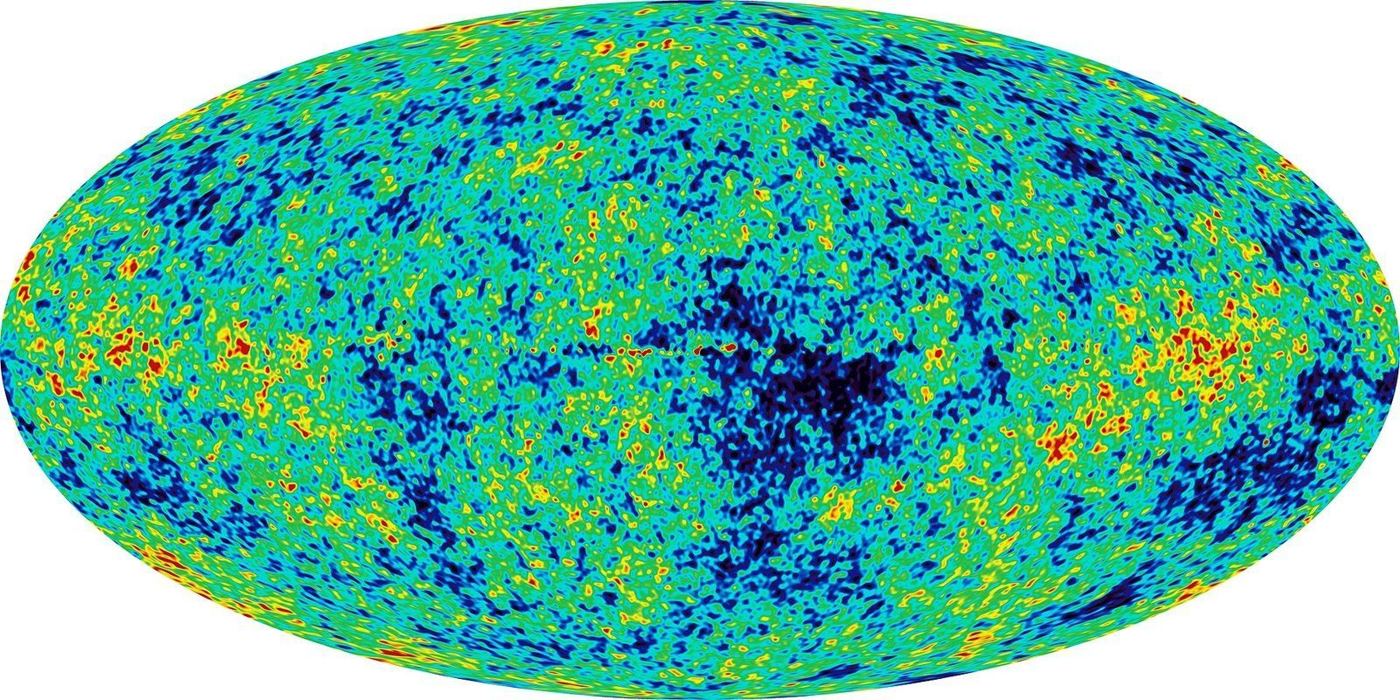
Reading the book today, one sees its age in particular places. It was written before the theory of cosmic inflation, which proposes a brief period of extraordinarily rapid expansion in the earliest instants, and long before the discovery in the late 1990s that the expansion of the universe is accelerating. The satellites that later mapped the microwave background in fine detail, COBE, WMAP and Planck, were still in the future, and with them the precise figures for the age and contents of the universe that are now taken for granted. Later editions add an afterword bringing some of this up to date. What is striking is how little of the core needed to change. The sequence of the first minutes, the synthesis of helium, the meaning of the background radiation: these have been confirmed and sharpened rather than overturned. The book is a good example of how a carefully argued account of established science ages differently from an account of the frontier.
The book also ends with what has become one of the most quoted sentences in popular science. Having described the universe from its first instants, Weinberg reflects from an aeroplane over a landscape that looks comfortably human, and observes that the more the universe seems comprehensible, the more it also seems pointless. It is easy to read that line as bleak. In context it is followed immediately by something gentler: if there is no comfort in the results of research, there is at least some consolation in the research itself, in the effort to understand, which lifts human life a little above the level of farce and gives it some of the grace of tragedy. I find that a more honest kind of meaning than a promise that the universe was arranged for us. It also suits the book, which is an extended demonstration of what that effort can achieve.
What I take from The First Three Minutes is less any particular fact than a sense of how far careful reasoning can reach. A hiss in a horn antenna in New Jersey, a measurement of the helium in old stars, and the laws of nuclear physics worked out in laboratories turn out to be enough to say, with real confidence, what the whole universe was doing when it was a few minutes old. The book is short, demanding in places, and never pretends to more certainty than it has. That combination of reach and restraint is what makes it worth reading even after the details have been updated.
Ayoub Khallok keeps this archive of essays, research, lessons and notes, written to understand things more clearly. More about Ayoub.