A review of regional economic development literature
The main schools of thought on why some regions grow and others fall behind, their evidence and their blind spots.
Published
20 April 2026
Why do some regions prosper while others stagnate, even inside the same country? This working review summarises four traditions that try to answer that question: convergence, cumulative causation, new economic geography and place-based policy. For each it sets out the core argument, the evidence and what it leaves out.
Status: working draft. I will keep revising this review as I read more.
Inside most countries, the gap between the richest and poorest regions is large, and it is remarkably persistent. Capital cities and a handful of big metropolitan areas pull ahead, while former industrial towns and many rural areas fall behind. The gap shapes where jobs are, how long people live, who moves and who stays, and, increasingly, how people vote. Economists, geographers and historians have offered several competing explanations for it. This review sets out the four traditions I have found most useful, the evidence for each, and what each leaves out.
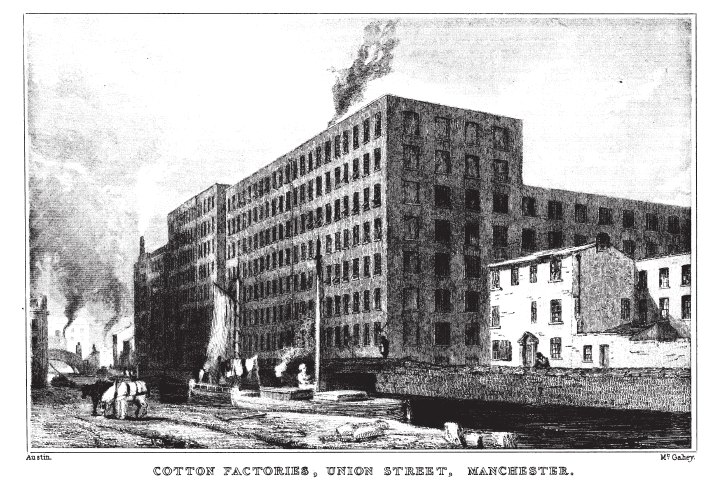
The problem is as old as industrialisation. In the first half of the nineteenth century, Manchester grew from a market town into the centre of the world’s cotton industry, so dominated by mills that it was nicknamed Cottonopolis. Its growth drew in workers, capital, engineers, merchants and banks from across Britain and beyond, while many rural districts lost population. Visitors came from all over Europe to see it, some in admiration and some, like Friedrich Engels, in horror at the conditions of the workers. Why industry gathered in such places, rather than spreading evenly across the country, is the question every tradition below tries to answer.
Convergence
The first tradition predicts that gaps should close by themselves. The neoclassical growth model associated with Robert Solow (1956) implies that poorer economies should grow faster than richer ones, because capital earns higher returns where it is scarce. Investment should flow towards poorer places, and workers should move towards richer ones, until the differences narrow. Applied to regions within a country, which share a currency, laws and a labour market, the prediction should hold especially well.
Robert Barro and Xavier Sala-i-Martin tested it on the states of the United States and on European regions in the early 1990s and found that convergence was real but slow: roughly 2 per cent of the remaining gap closed each year. At that pace, halving a gap takes about thirty-five years, more than a working lifetime. The blind spot of this tradition is that convergence in the average can hide regions that never catch up at all, and in many countries the trend towards convergence has weakened or reversed since the 1980s.
Cumulative causation
The second tradition argues almost the opposite. Gunnar Myrdal (1957) and Albert Hirschman (1958) both proposed that once a region gets ahead, it tends to stay ahead and pull further away. It attracts more workers, firms and investment, which makes it more attractive still, while lagging regions lose their most mobile people and capital. Myrdal called these losses “backwash effects”. Hirschman was somewhat more hopeful, arguing that growth in leading regions would eventually spread outwards, though he too expected a long period of polarisation first. The ideas were powerful and widely discussed, but they were hard to state precisely or test, which limited their influence on mainstream economics for decades.
New economic geography and agglomeration
The third tradition gave cumulative causation the formal model it lacked. Paul Krugman’s 1991 paper Increasing Returns and Economic Geography showed how, when transport costs fall and firms benefit from being close to large markets, economic activity can concentrate in a core while the periphery remains agricultural. In his model, small initial differences, even historical accidents, can decide which region becomes the core, and once the pattern is set it can be very stable.
Related work on agglomeration explains why big cities are so productive. The idea goes back to Alfred Marshall, who wrote in 1890 that in an industrial district the secrets of a trade become no secrets, but are, as he put it, “in the air”. Firms in the same place share specialised suppliers and pools of skilled workers, and ideas spread faster when people are close enough to meet. Michael Porter’s work on industrial clusters (1990) brought these ideas into policy, and Enrico Moretti’s The New Geography of Jobs (2012) documented the growing divide in the United States between innovation hubs and the rest of the country. The blind spot here is that these models explain very well why concentration happens, but they say much less about what lagging places can do about it.
Place-based policy
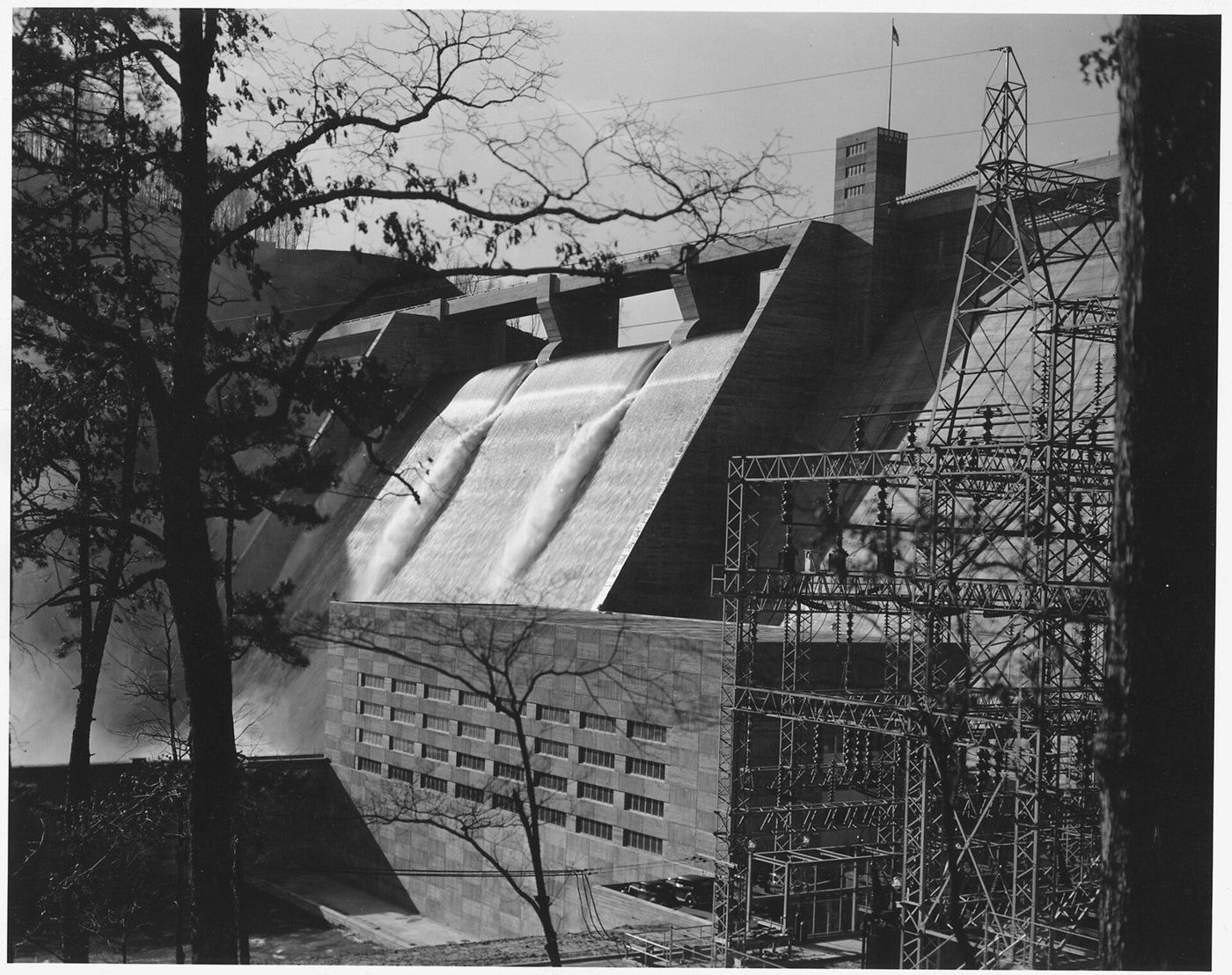
If market forces concentrate growth, should governments push back, and does it work? The fourth tradition looks at the evidence on policies aimed at particular places, and the evidence is mixed. Patrick Kline and Enrico Moretti (2014) studied the Tennessee Valley Authority, the huge programme of dams, electrification and development launched in 1933 in one of the poorest regions of the United States. They found lasting gains in manufacturing employment in the region, which persisted long after the subsidies ended, but argued that the gains for the country as a whole were smaller than the local ones, because some of the activity had simply moved from elsewhere.
Andrés Rodríguez-Pose’s article The revenge of the places that don’t matter (2018) makes a different case. Ignoring declining regions, he argues, has political costs, visible in the rise of populist voting in exactly those places. His proposed answer is neither neglect nor generic subsidies, but development policies tailored to each region’s own strengths and potential. The weakness of this whole tradition is that good evaluations are rare, because it is very hard to know what would have happened to a region without the policy.
Where I land for now
Convergence is real, but far too slow to rely on. Agglomeration explains why gaps open and why they persist. Policy can help, but only when it builds on what a region already has rather than trying to transplant something from elsewhere. The open question I most want to read more about is which local institutions, such as universities, banks, local governments and business networks, make the difference between regions that recover from a shock and regions that do not.
Ayoub Khallok keeps this archive of essays, research, lessons and notes, written to understand things more clearly. More about Ayoub.